Intraocular Pressure, Intracranial Pressure, Translaminar Pressure Difference and Related Factors in Primary Open Angle Glaucoma
Actors Affecting in Primary Open Angle Glaucoma
Vol. 21 No. 1 : 2026 (175-190)

Abstract
This study aims to investigate and compare the relationship between intracranial pressure (ICP), intraocular pressure (IOP) and translaminar pressure difference (TLPD) in high-tension glaucoma (HTG) patients and healthy individuals. Newly diagnosed HTG patients and healthy subjects without ocular comorbidities were recruited. All participants underwent blood pressure, heart rate, body weight, height and comprehensive ocular examinations, including best-corrected visual acuity, IOP measurement, optic nerve head assessment, peripapillary retinal nerve fibre layer and macular imaging, visual field testing, axial length and central corneal thickness measurements. ICP was estimated using the formula:
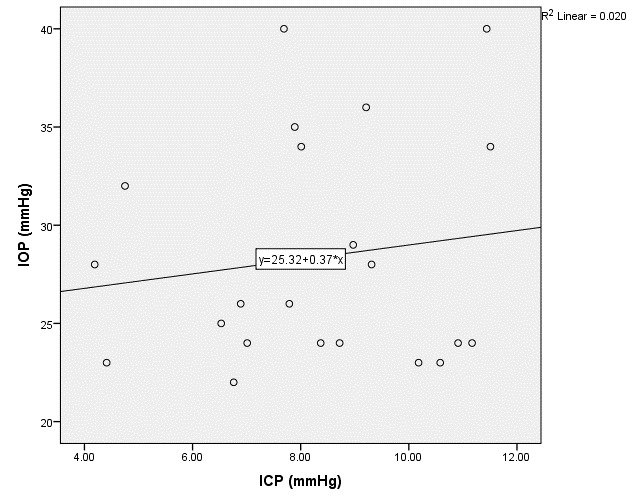
Cerebrospinal fluid pressure (mmHg) = (0.44×x Body Mass Index (kg/m2)) + (0.16 x× Diastolic Blood Pressure (mmHg))-(0.18 x Age (years)) - 1.91. TLPD was calculated by subtracting the estimated ICP from the IOP. Compared to healthy subjects, HTG patients had significantly higher median IOP [26.00 (24.00-34.00) mmHg vs. 13.00 (10.00-14.00) mmHg], lower median ICP [8.19 (6.86-10.28) mmHg vs. 11.31 (8.91-12.36) mmHg], and higher median TLPD [18.64 (15.27-26.19) mmHg vs. 1.72 (0.27-4.62) mmHg]. There was no correlation between IOP and ICP; however, IOP was significantly correlated with TLPD in both groups, HTG (r = 0.911, p < 0.001) and non-glaucomatous (r = 0.758, p < 0.001). In healthy subjects, TLPD was moderately and negatively correlated with ICP (r = -0.525, p = 0.012). The lower ICP observed in HTG patients suggests that ICP may be associated with the development of glaucoma. Further research is needed to explore the impact of ICP on glaucoma progression and disease management.
Keywords :
Cerebrospinal fluid pressure; glaucoma; intracranial pressure; intraocular pressure; primary open angle glaucoma; translaminar pressure difference,
Correspondance Address
Correspondence: jemaima@hctm.ukm.edu.my
References
Albuquerque, L.L., Gaete, M.I., Figueiroa, J.N., Alves, J.G. 2013. The correlation between body mass index and intraocular pressure in children. Arq Bras Oftalmol 76(1): 10-2. https://doi.org/10.1590/s0004-27492013000100004.
Berdahl, J.P., Allingham, R.R. 2009. Cerebrospinal fluid pressure may play a role in reversal of cupping after glaucoma surgery. Am J Ophthalmol 148(4): 623-4. https://doi.org/10.1016/j.ajo.2009.06.002.
Berdahl, J.P., Allingham, R.R. 2010. Intracranial pressure and glaucoma. Curr Opin Ophthalmol 21(2): 106-11. https://doi.org/10.1097/ICU.0b013e32833651d8.
Berdahl, J.P., Allingham, R.R., Johnson, D.H. 2008a. Cerebrospinal fluid pressure is decreased in primary open-angle glaucoma. Ophthalmology 115(5): 763-8. https://doi.org/10.1016/j.ophtha.2008.01.013
Berdahl, J.P., Fautsch, M.P., Stinnett, S.S., Allingham, R. 2008b. Intracranial pressure in primary open angle glaucoma, normal tension glaucoma, and ocular hypertension: A case-control study. Invest Ophthalmol Vis Sci 49(12), 5412-8. https://doi.org/10.1167/iovs.08-2228
Chen, B.H., Drucker, M.D., Louis, K.M., Richards, D.W. 2016. Progression of normal-tension glaucoma after ventriculoperitoneal shunt to decrease cerebrospinal fluid pressure. J Glaucoma 25(1): e50-e52. https://doi.org/10.1097/IJG.0000000000000186.
Chen, C.Y., Huang, E.J.C., Kuo, C.N., Wu, P.L., Chen, C.L., Wu, P.C., Wu, S.H., King, Y.C., Lai, C.H. 2018. The relationship between age, axial length and retinal nerve fiber layer thickness in the normal elderly population in Taiwan: The chiayi eye study in Taiwan. PLoS One 13(3): 1-13. https://doi.org/10.1371/journal.pone.0194116.
Cohen, E., Kramer, M., Shochat, T., Goldberg, E., Garty, M., Krause, I. 2016. Relationship between body mass index and intraocular pressure in men and women: A population-based study. J Glaucoma 25(5): e509-13. https://doi.org/10.1097/IJG.0000000000000374
Czarnik, T., Gawda, R., Kolodziej, W., Latka, D., Sznajd-Weron, K., Weron, R. 2009. Associations between intracranial pressure, intraocular pressure and mean arterial pressure in patients with traumatic and non-traumatic brain injuries. Injury 40(1): 33-9. https://doi.org/10.1016/j.injury.2008.10.010
Flammer, J., Haefliger, I.O., Orgül, S., Resink, T. 1999. Vascular dysregulation: A principal risk factor for glaucomatous damage? J Glaucoma 8(3): 212-9.
Fleischman, D., Berdahl, J.P. 2014. Posterior scleral biomechanics and the translaminar pressure difference. Int Ophthalmol Clin 54(1): 73-94. https://doi.org/10.1097/IIO.0b013e3182aabef4.
Fleischman, D., Berdahl, J.P., Zaydlarova, J., Stinnett, S., Fautsch, M.P., Allingham, R.R. 2012. Cerebrospinal fluid pressure decreases with older age. PLoS One 7(12): 1-9. https://doi.org/10.1371/journal.pone.0052664
Guidoboni, G., Harris, A., Cassani, S., Arciero, J., Siesky, B., Amireskandari, A., Tobe, L.A., Egan, P., Januleviciene, I., Park, J. 2014. Intraocular pressure, blood pressure and retinal blood flow autoregulation: A mathematical model to clarify their relationship and clinical relevance. Invest Ophthalmol Vis Sci 55(7): 1-40. https://doi.org/ 10.1167/iovs.13-13611.
Han, X., Niu, Y., Guo, X., Hu, Y., Yan, W., He, M. 2016. Age-related changes of intraocular pressure in elderly people in southern China: Lingtou Eye Cohort study. PLoS One 11(3): 2-11. https://doi.org/10.1371/journal.pone.0151766.
Han, Y., McCulley, T.J., Horton, J.C. 2008. No correlation between intraocular pressure and intracranial pressure. Ann Neurol 64(2): 221-4. https://doi.org/10.1002/ana.21416.
Hou, R., Zhang, Z., Yang, D., Wang, H., Chen, W., Li, Z., Sang, J., Liu, S., Cao, Y., Xie, X., Ren, R., Zhang, Y., Sabel, B.A., Wang, N. 2016. Pressure balance and imbalance in the optic nerve chamber: The Beijing Intracranial and Intraocular Pressure (iCOP) Study. Sci China Life Sci 59(5): 495-503. https://doi.org/10.1007/s11427-016-5022-9.
Jonas, J.B. 2011. Role of cerebrospinal fluid pressure in the pathogenesis of glaucoma. Acta Ophthalmol 89(6): 505-14. https://doi.org/10.1111/j.1755-3768.2010.01915.x.
Jonas, J.B., Berenshtein, E., Holbach, L. 2004. Lamina cribrosa thickness and spatial relationships between intraocular space and cerebrospinal fluid space in highly myopic eyes. Invest Ophthalmol Vis Sci 45(8): 2660-5. https://doi.org/10.1167/iovs.03-1363.
Jonas, J.B., Wang, N., Wang, S., Wang, Y.X., You, Q.S., Yang, D., Wei, W.B., Xu, L. 2014a. Retinal vessel diameter and estimated cerebrospinal fluid pressure in arterial hypertension: The Beijing eye study. Am J Hypertens 27(9): 1170-7. https://doi.org/10.1093/ajh/hpu037
Jonas, J.B., Wang, N., Wang, Y. X., You, Q.S., Xie, X., Yang, D., Xu, L. 2014b. Body height, estimated cerebrospinal fluid pressure and open-angle glaucoma. The Beijing eye study 2011. PLoS One 9(1): 1170-8. https://doi.org/10.1371/journal.pone.0086678
Jonas, J.B., Wang, N., Xu, J., Wang, Y.X., You, Q.S., Yang, D., Xie, X.B., Xu, L. 2014c. Diabetic retinopathy and estimated cerebrospinal fluid pressure. The Beijing eye study 2011. PLoS One 9(5): e96273. https://doi.org/10.1371/journal.pone.0096273
Jonas, J.B., Wang, N.L., Wang, Y.X., You, Q.S., Xie, X.B., Yang, D.Y., Xu, L. 2015. Estimated trans-lamina cribrosa pressure difference versus intraocular pressure as biomarker for open-angle glaucoma. The Beijing Eye Study 2011. Acta Ophthalmol 93(1): e7-13. https://doi.org/10.1111/aos.12480
Kirk, T., Jones, K., Miller, S., Corbett, J. 2011. Measurement of intraocular and intracranial pressure: Is there a relationship? Ann Neurol 70(2): 323-6. https://doi.org/10.1002/ana.22414
Kumar, A., Sharma, N., Rathee, A., Pradhan, N. 2019. Comparison of body mass index and intraocular pressure. Int J Res Med Sci 7(2): 367. https://doi.org/10.18203/2320-6012.ijrms20190336
Lam, C.T.Y., Trope, G.E., Buys, Y.M. 2017. Effect of head position and weight loss on intraocular pressure in obese subjects. J Glaucoma 26(2): 107-12. https://doi.org/10.1097/IJG.0000000000000573
Lashutka, M.K., Chandra, A., Murray, H.N., Phillips, G.S., Hiestand, B.C. 2004. The relationship of intraocular pressure to intracranial pressure. Ann Emerg Med 43(5): 585-91. https://doi.org/10.1016/j.annemergmed.2003.12.006
Leske, M.C., Heijl, A., Hussein, M., Bengtsson, B., Hyman, L., Komaroff, E., Lee, P. 2003. Factors for glaucoma progression and the effect of treatment. Evidence-Based Eye Care 4(4): 196-7. https://doi.org/10.1097/00132578-200310000-00007
Leske, M.C., Heijl, A., Hyman, L., Bengtsson, B., Dong, L.M., Yang, Z., EMT Group. 2007. Predictors of long-term progression in the early manifest glaucoma trial. Ophthalmology 114(11): 1965-72. https://doi.org/10.1016/j.ophtha.2007.03.016
Li, Z., Yang, Y., Lu, Y., Liu, D., Xu, E., Jia, J., Yang, D., Zhang, X., Yang, H., Ma, D., Wang, N. 2012. Intraocular pressure vs intracranial pressure in disease conditions: A prospective cohort study (Beijing iCOP study). BMC Neurol 12: 2010-3. https://doi.org/10.1186/1471-2377-12-66
Marek, B., Harris, A., Kanakamedala, P., Lee, E., Amireskandari, A., Carichino, L., Guidoboni, G., Tobe, L.A., Siesky, B. 2014. Cerebrospinal fluid pressure and glaucoma: Regulation of trans-lamina cribrosa pressure. Br J Ophthalmol 98(6): 721-5. https://doi.org/10.1136/bjophthalmol-2013-303884
Morgan, W.H., Yu, D.Y., Alder, V.A., Cringle, S.J., Cooper, R.L., House, P.H., Constable, I.J. 1998. The correlation between cerebrospinal fluid pressure and retrolaminar tissue pressure. Invest Ophthalmol Vis Sci 39(8): 1419-28. https://doi.org/10.1167/iovs.98-3908-1419
Morgan, W.H., Yu, D.Y., Balaratnasingam, C. 2008. The role of cerebrospinal fluid pressure in glaucoma pathophysiology: The dark side of the optic disc. J Glaucoma 17(5): 408-13. https://doi.org/10.1097/IJG.0b013e31815c5f7c
Morgan, W.H., Yu, D.Y., Cooper, R.L., Alder, V.A., Cringle, S.J., Constable, I.J. 1995. The influence of cerebrospinal fluid pressure on the lamina cribrosa tissue pressure gradient. Invest Ophthalmol Vis Sci 36(11): 2163-4.
Pedersen, S.H., Lilja-Cyron, A., Andresen, M., Juhler, M. 2018. The relationship between intracranial pressure and age-chasing age-related reference values. World Neurosurg 110: e119-23. https://doi.org/10.1016/j.wneu.2017.10.086
Price, D.A., Harris, A., Siesky, B., Mathew, S. 2020. The influence of translaminar pressure gradient and intracranial pressure in glaucoma: A review. J Glaucoma 29(2): 141-6. https://doi.org/10.1097/IJG.0000000000001421
Pruzan, N.L., Myers, J.S. 2015. Phenotypic differences in normal vs high tension glaucoma. J Neuroophthalmol 35(19): S4-S7. https://doi.org/10.1097/WNO.0000000000000297
Quigley, H., Broman, A.T. 2006. The number of people with glaucoma worldwide in 2010 and 2020. Br J Ophthalmol 90(3): 262-7. https://doi.org/10.1136/bjo.2005.081224
Ren, R., Jonas, J.B., Tian, G., Zhen, Y., Ma, K., Li, S., Wang, H., Li, B., Zhang, X., Wang, N. 2010. Cerebrospinal fluid pressure in glaucoma. A prospective study. Ophthalmology 117(2): 259-66. https://doi.org/10.1016/j.ophtha.2009.06.058
Roy Chowdhury, U., Fautsch, M.P. 2015. Intracranial pressure and its relationship to glaucoma: Current understanding and future directions. Med Hypothesis Discov Innov Ophthalmol 4(3): 71-80.
Siaudvytyte, L., Januleviciene, I., Ragauskas, A., Bartusis, L., Meiliuniene, I., Siesky, B., Harris, A. 2014. The difference in translaminar pressure gradient and neuroretinal rim area in glaucoma and healthy subjects. J Ophthalmol 2014: 937360. https://doi.org/10.1155/2014/937360
Siaudvytyte, L., Januleviciene, I., Ragauskas, A., Bartusis, L., Siesky, B., Harris, A. 2015. Update in intracranial pressure evaluation methods and translaminar pressure gradient role in glaucoma. Acta Ophthalmol 93(1): 9-15. https://doi.org/10.1111/aos.12502
Subramaniam, S., Fletcher, W.A. 2017. Obesity and weight loss in idiopathic intracranial hypertension: A narrative review. J Neuroophthalmol 37(2): 197-205. https://doi.org/10.1097/WNO.0000000000000448
Turgut, B., Turgut, F.A. 2017. Differences between the characteristics of normal tension glaucoma and high tension glaucoma. Adv Ophthalmol Vis System 7(7): 449-51. https://doi.org/10.15406/aovs.2017.07.00250
Weinreb, R.N., Tee Khaw, P. 2004. Primary open-angle glaucoma. Lancet 363(9422): 1711-20. https://doi.org/10.1016/S0140-6736(04)16257-0
Wong, T.T., Wong, T.Y., Foster, P.J., Crowston, J.G., Fong, C.W., Aung, T. 2009. The relationship of intraocular pressure with age, systolic blood pressure, and central corneal thickness in an Asian population. Invest Ophthalmol Vis Sci 50(9): 4097-102. https://doi.org/10.1167/iovs.08-2822
Xie, X., Zhang, X., Fu, J., Wang, H., Jonas, J. B., Peng, X., Tian, G., Xian, J., Ritch, R., Li, L., Kang, Z., Zhang, S., Yang, D., Wang, N., Hou, R., Li, Z., Zhang, Z., Sang, J., Chen, W., Liu, S. 2013. Noninvasive intracranial pressure estimation by orbital subarachnoid space measurement: The Beijing Intracranial and Intraocular Pressure (iCOP) study. Crit Care 17(4): R162. https://doi.org/10.1186/cc12841
Yang, D., Fu, J., Hou, R., Liu, K., Jonas, J.B., Wang, H., Chen, W., Li, Z., Sang, J., Zhang, Z., Liu, S., Cao, Y., Xie, X., Ren, R., Lu, Q., Weinreb, R.N., Wang, N. 2014. Optic neuropathy induced by experimentally reduced cerebrospinal fluid pressure in monkeys. Invest Ophthalmol Vis Sci 55(5): 3067-73. https://doi.org/10.1167/iovs.14-15244
Zhang, Z., Wu, S., Jonas, J.B., Zhang, J., Liu, K., Lu, Q., Wang, N. 2016. Dynein, kinesin and morphological changes in optic nerve axons in a rat model with cerebrospinal fluid pressure reduction: The Beijing Intracranial and Intraocular Pressure (iCOP) study. Acta Ophthalmol 94(3): 266-75. https://doi.org/10.1111/aos.12768